

should we modernize the classics?
thoughts on christopher nolan's the odyssey, when it works and when it doesn't

It has been very eventful lately for my fellow book and film lovers. As a person who loves to geek out pretentiously about both, I have been enjoying the chance to talk about literary classics that are getting adapted to the big screen. However, as disappointing as both Guillermo del Toro’s Frankenstein and Emerald Fennell’s Wuthering Heights were, I’m happy to say that Christopher Nolan’s The Odyssey felt like a breath of fresh air.
While in middle school I had a very in depth Greek mythology phase, as one does (partly initiated by Percy Jackson). I have read every single Greek tragedy that exists. I read many more books about mythologies, different ones from different regions, modern retellings, historical researches about the time, and other fictional additions to that world. The Iliad and The Odyssey have both been a touchstone for me at some point in time. Safe to say, I’m very familiar with the original text.
The Odyssey is one of my favorite books, however Odysseus is up there amongst the characters I hate the most in Greek mythology—or maybe even ever.
In the most underwhelming and nicest way possible, Odysseus is simply a loathsome character. He is a classic mythological ‘hero’, and if you’ve ever read anything in Greek mythology you know what kind of baggage that comes with. As a soldier, he kills directly and indirectly thousands of people, even though he knows better; he causes innocent people to lose their homes, and a whole kingdom to perish through very inglorious means. As a husband, he cheats on his wife countless times, to the point he has an illegitimate son, while swearing that in his heart he was always true to Penelope, and even has the audacity to ‘test’ her upon his return. He is extremely egotistical and prideful, he uses his intelligence in very immoral ways to get what he wants (usually by tricking people), often looks down on others and loves to shove his intelligence down everyone’s throats. He is simply not a good person in my opinion. Redeemable, maybe—up until some point. Which is what makes him and his story interesting.
Nolan fails exactly where I (and everyone else) expected him to; the characters. Obviously Nolan is an amazing filmmaker, but unfortunately he is not even a great writer. And his weakest point is writing characters. It was no surprise to me that his Odysseus was very mild. I even felt bad for him, and at times found myself rooting for him, which actually never happened while I was reading the book because he always just went and did something to annoy me again.
I was also simply not convinced of his intelligence, which is a huge aspect of the character—I mean it’s like his whole thing. Matt Damon’s Odysseus just didn’t seem like the type of guy who would endanger his own life just so he could be the first person to hear the song of the sirens and live to tell the tale. Normally I would have a huge problem with this because he obviously flattened out the character, but I can see Nolan’s reasons for doing so, and at the end it didn’t bother me that much (more on this later).
His flattening of the women characters however, seems out of place, considering the source material. The Odyssey stands apart from its contemporaries in many ways, because it is a detailed entry into women’s lives for the readers; their domestic chores, their roles in society, in a much more intricate and empirical way than we ever have seen before. Almost every single important character we come across besides Odysseus and his crew are women. Odysseus does not shape his own journey more than these women, he’s at most reacting to them.
So I’m attributing Nolan’s writing of the women in his version to a lack of skill, instead of a deliberate choice. His underutilization of characters like Calypso and Athena feel like a waste of potential, especially after experiencing the emotional weight carried by Circe and Penelope’s scenes—which were always brief, because he is scared of fleshing out these women. Unfortunately, I genuinely don’t think Nolan is capable of writing women with interiority. I’m starting to doubt he even wants to, but that’s a fully different conversation.
Unexpectedly, I found the film very emotional. Even though the dialogue is sometimes very clunky, it’s driven by the scenes in which two characters merely converse, and while at its core it’s about the consequences of war, we only see a glimpse of said war towards the end, as a flashback.
I think what Nolan is using this ancient story to tell is a very powerful message. The idea of taking one of the oldest stories of all time, a story that glorifies war and war heroes to then turn it on its head as an anti-war film is so clever and relevant.
The Odyssey is about the downfall of society, about individualist and therefore selfish causes prevailing over the good of the community. And Odysseus is the direct cause of this fall—he wins the war by breaking the Xenia1, referred to as Zeus’ law in the film (mentioned probably over 20 times so that you can’t miss it). Xenia is the backbone of this society; the mutual respect between hosts and guests. This creates trust and empathy between strangers, and grants them the privilege of safe passage in an arguably dangerous world. The act itself strengthens the bond between people of different or similar backgrounds, and creates community.
It’s implied that the reason Odysseus couldn’t get home for 10 years after the war was that the gods were mad at him for breaking this sacred rule of society. Odysseus and his fleet repeatedly try to rely on other peoples following this custom that they broke in the first place, and to their surprise lose their men in return. They hear talks of dangerous sea people, savages who don’t respect Xenia, and get concerned. When will they realize that it’s about them?
What was the reason for this war? To take control of trade routes, to have more economic and political power as Odysseus explains to Penelope, but that seems like a very sad cause to give 10 years of your life to. The war is won, but at what cost to those who participated in it? Who got to live its glory? Not Odysseus, and definitely not Agamemnon.
Once the law has been broken, Greeks turn into savages, looting and raping and burning down an entire city, drunk on their newfound power. Odysseus realizes what he has done, but it’s too late. They have turned into men who no longer respect Xenia, and this is their first step towards becoming an individualist society, one like America today.
Nolan’s choice to have the characters speak in modern day English, in a very American accent, is a way of critiquing the current, modern American society. Even the way the characters butcher Greek names with their American accents, the way it scratches your ear (or mine at least as a non-American) could be interpreted as done on purpose.2 In its themes this film is very similar to Oppenheimer, especially in its critique of colonialism and war, but I was much more emotionally invested in The Odyssey, which was what was missing in my experience with Oppenheimer.
While in the original text, Odysseus sees himself as a war hero; Nolan’s Odysseus is racked by guilt, and it’s implied that he’s subconsciously keeping himself from returning home, because he doesn’t see himself as worthy anymore—after causing thousands to lose their homes in a purposeless war.
In myths, Odysseus is no different than any other Greek mythology hero. Achilles, one of the most famous warriors of his time, is a great character study to understand the mindset of these men; rather than a long and peaceful but obscure life, they would almost always choose the short and painful but glorious life.
These men almost never feel any remorse about their war crimes, simply because their actions weren’t considered ‘war crimes’ at the time. Their relationship to war and death are very different to our modern society’s relationship to it, and so keeping these themes, and keeping Odysseus’s characterization as it is wouldn’t have been a good choice anyway in my opinion. The book reflects the context of its time, so why wouldn’t the film? In fact, I don’t think I have seen any modern retelling of this story that doesn’t somehow ruminate on the negative consequences of the war. Because what would we even gain from painting Odysseus as a hero in today’s world? I’ll let you make the connection.
I have seen many people disappointed that the film is quite different than the text, that some important moments are taken out (like the scene with Polyphemus). But considering the themes and the core message of the film, I don’t think these moments would have worked in the film. The tone of the film and the book are vastly different; the book is a comedy, while the film is a tragedy. Two sides of the same coin, two different approaches to the subject matter of war. Some things obviously needed to be taken out.
As a book, The Odyssey is very enjoyable to read as it is, but I don’t mind this tonal shift in the movie at all. If anything is meant to be adapted and changed in order to tell a relevant message, it’s myths. This is their whole purpose, it’s folklore created to explain and to understand. Myths have been tweaked and interpreted numerous times, and it will keep happening, they will keep changing according to the needs of our society, to serve as illuminators of the human condition. And I believe the changes Nolan brought to the story, while not perfect at times, came together very well at the end.
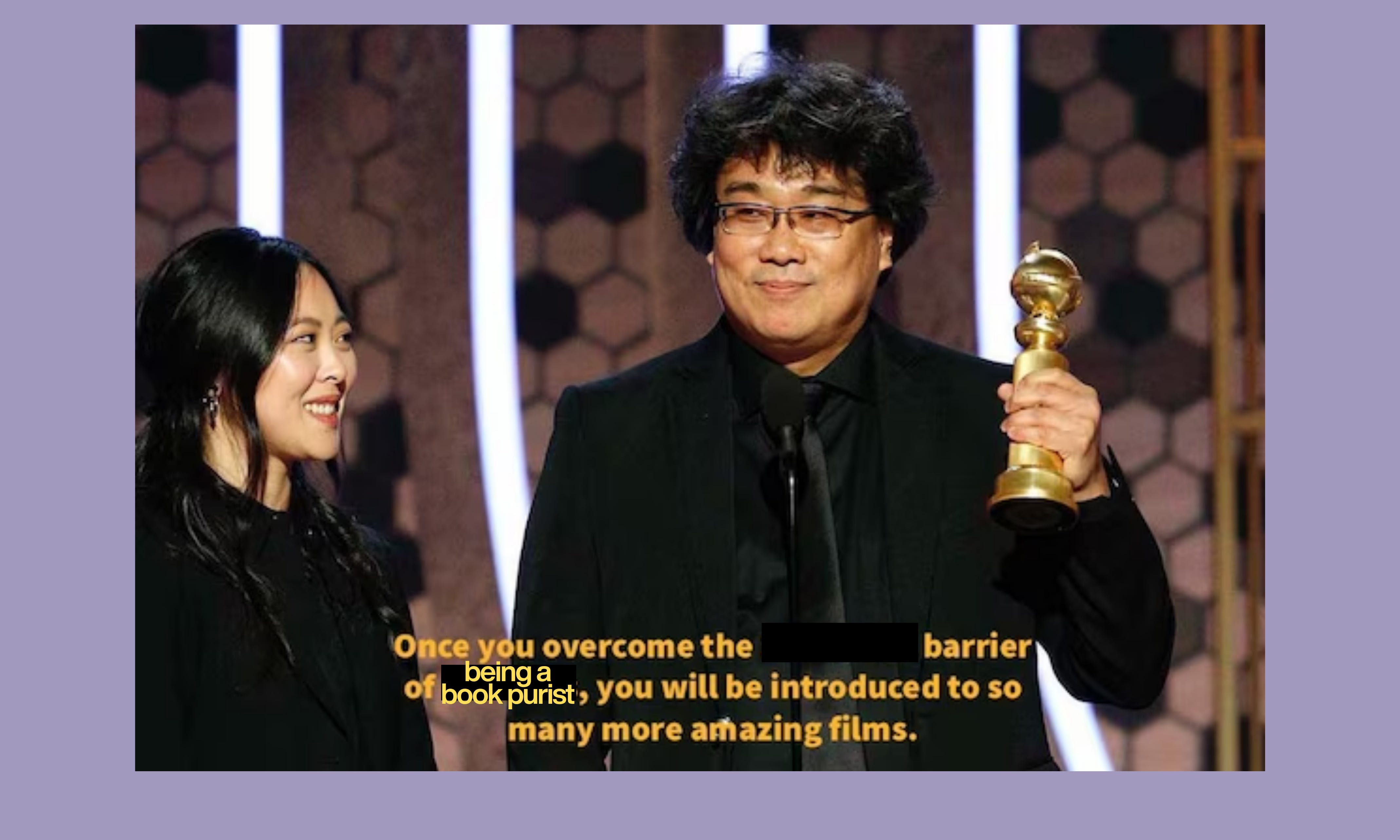
In a way, we could say that this story was modernized in its themes, because of these reasons, and I find that very appropriate with the context of our times, and therefore the context of the film.
But there are of course some changes I was disappointed to see, like how the whole ‘mythology’ aspect was kept to a minimum. The gods are more of a concept in this film, rather than actual characters. The god we see the most of, Athena, is probably in Odysseus’s imagination, his guilt and conscience materialized and talking back to him in the form of an innocent priestess his men killed. There are some mythological things happening, like Polyphemus, Circe, or the very brief appearance of Scylla, but overall it’s quite ‘realistic’ and tame. Kind of disappointing, but not surprising at all.
One of my favorite things about these book-to-film adaptations is the fact that the books become a wide topic of conversation again. I love seeing discussions around The Odyssey, because it is the type of book that everyone leaves with a different sentiment. And there is very little I enjoy more in life than talking about books and films!
And who would I be if I didn’t give some book recommendations that no one asked for? If you want to get into the tragedies, my favorites are Medea and The Bacchae by Euripides. Some other favorites if you want to get into myths in general are Mythology by Edith Hamilton (explains almost every prominent myth and character in depth) and Till We Have Faces by C.S. Lewis (if you are more into fiction).
Or honestly, just read Percy Jackson.
love, asli
although, you could argue that paris broke the xenia first by seducing menelaus’s wife at his home, but that depends on how you interpret helen’s role in it, whether she went with him willingly or unwillingly
i’m not going to talk about the casting in this because that is a very nuanced conversation actually and i think people are approaching it in the wrong ways. all i’m going to say is hollywood thinks mediterranean people can just be replaced by any people and it’s not surprising. similar phenomenon happened with dune and no one cared so
Watched the film last night and you have put words to my feelings exactly! I especially wish Nolan had leaned more into the the mythological elements in the film as the scene with Circe and and Polyphemus were some of my faves
I’m literally working on an essay about Nolan’s Odyssey at this very moment and you said so much that I wanted to say (especially about the flattening of characters). So glad it’s not just me